
Kathmandu, Nepal – December 28, 2025
When discussions around quantum computing arise, they usually revolve around billion-dollar laboratories, national programs, and hardware that only a handful of institutions worldwide can access. But what if quantum-like computation didn’t have to depend entirely on expensive physical infrastructure?
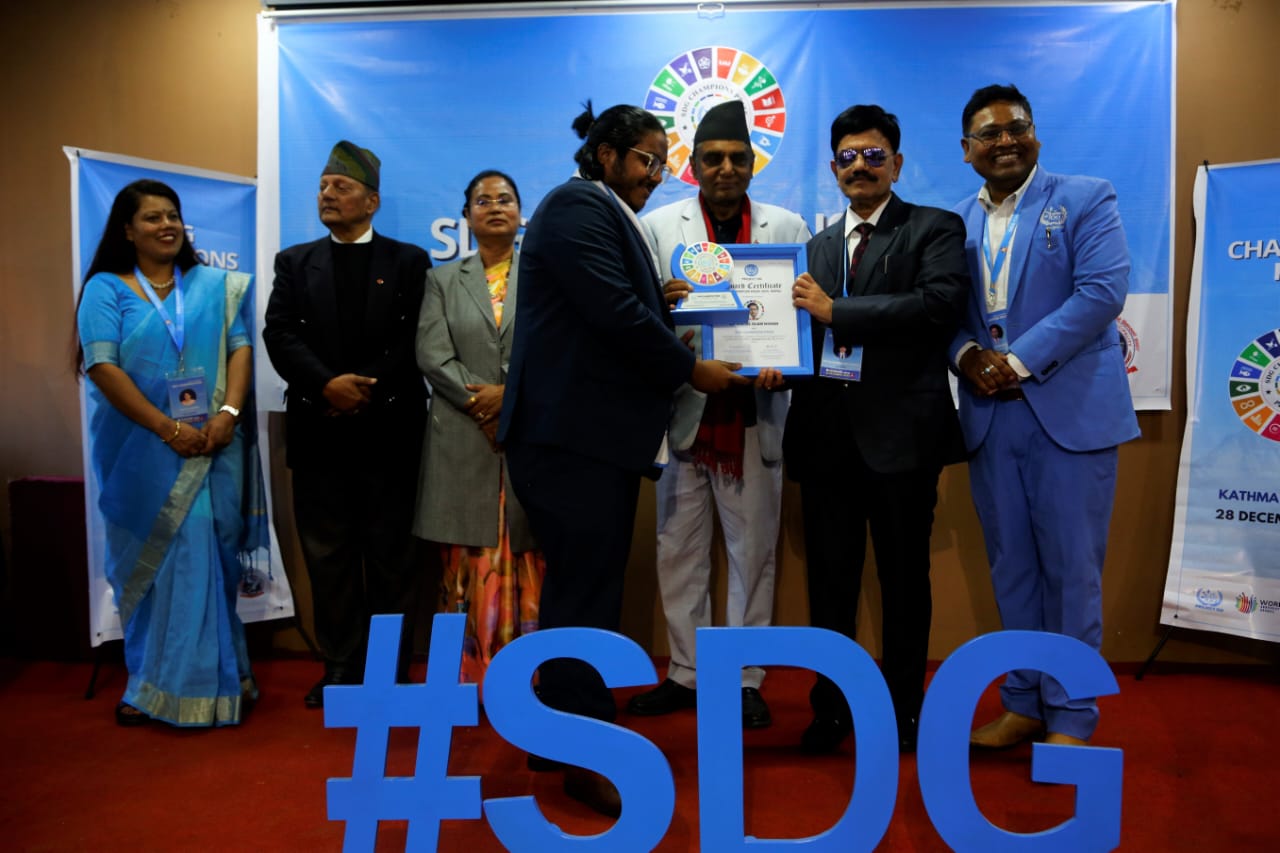
That question sits at the heart of a research breakthrough by MD Waliul Islam Nohan, a Bangladeshi AI researcher and Lead Technologist at Aaladin AI, whose work recently earned recognition at the SDG Championship 2025, under a United Nations–led initiative.
Nohan’s award-winning paper
“$46 AI Model Beats $46M Quantum Project of India: An AI-Driven Scalable Quantum Circuit Simulation Framework Capable of Emulating 100+ Qubits”—
presents a software-centric approach to quantum circuit simulation, demonstrating how intelligent AI systems can emulate complex quantum behavior at a fraction of the traditional cost and energy footprint.
From Curiosity to Capability
The origins of the research were not rooted in competition, but necessity. While working on data-intensive problems at the intersection of physics and molecular biology, Nohan encountered a familiar barrier faced by researchers worldwide: limited access to quantum computing resources.
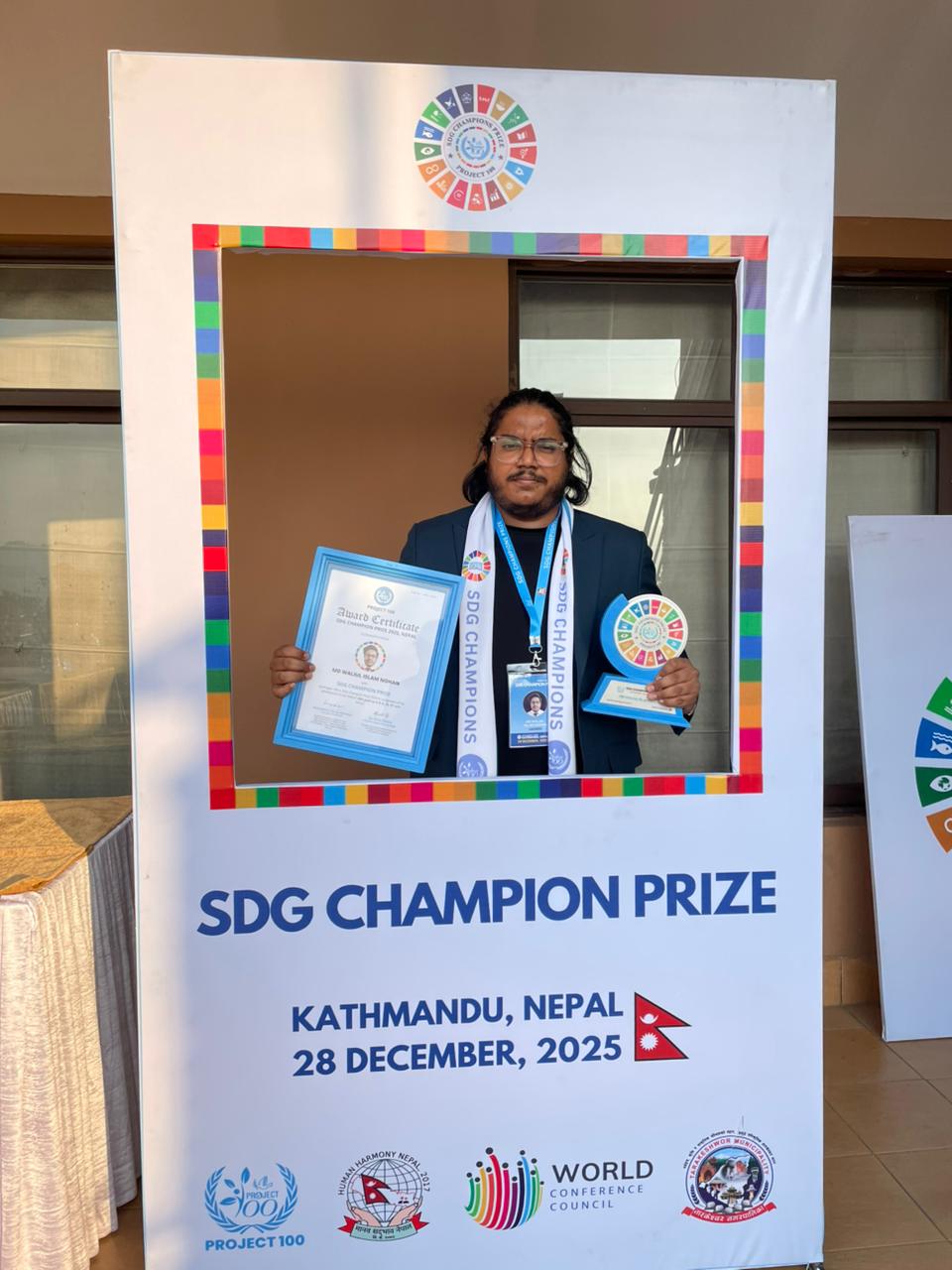

Instead of seeking access to high-cost quantum facilities, he began exploring whether AI models could approximate quantum circuit behavior accurately enough to support real research workflows. What began as an experiment soon evolved into a scalable framework capable of executing and benchmarking key quantum algorithms, including Shor’s Algorithm and Quantum Phase Estimation–like processes, with simulated performance exceeding 100 qubits.
“This work started from curiosity, not competition,” Nohan explains.
“I wanted to understand how far intelligent systems could go if we focused on efficiency rather than brute-force computation.”
Efficiency Over Excess
At a time when global AI development is increasingly defined by growing model sizes, rising computational demands, and expanding data centers, Nohan’s work takes a deliberately different approach.
Rather than scaling hardware, the framework optimizes algorithmic efficiency and intelligent approximation, significantly reducing energy consumption and infrastructure requirements. While it does not aim to replace physical quantum processors, it offers a practical and accessible alternative for education, early-stage research, and institutions operating without access to advanced quantum hardware.
This philosophy of “doing more with less” is a central reason the work aligns with multiple UN Sustainable Development Goals, including Quality Education (SDG 4), Industry and Innovation (SDG 9), Reduced Inequalities (SDG 10), and Climate Action (SDG 13).
A Technologist Shaped by Industry and Community
Nohan’s research journey is backed by more than seven years of experience in the IT industry, where he has worked as an AI Engineer, Tech Lead, and Project Manager. That experience gave him an understanding not only of how advanced systems are built, but also how organizations manage cost, scale, and real-world constraints.
Alongside his professional career, he has been recognized through multiple innovation platforms, including the NASA Space Apps Challenge, national robotics championships, and several hackathons and datathons.
Yet his impact extends beyond personal achievements. By building and mentoring a 100+ member developer community across universities, Nohan has helped young engineers develop award-winning projects rooted in real-world problem solving.
Aaladin AI and a Broader Vision
These efforts eventually led to the creation of Aladdin AI, where Nohan serves as Lead Technologist, focusing on a core belief: AI should be efficient, responsible, and broadly accessible—not limited to high-cost, high-compute systems.
At Aladdin AI, the team works on innovative AI solutions with a strong emphasis on model efficiency, computational optimization, and AI policy–aware design. Rather than scaling intelligence through larger models and heavier infrastructure, the organization prioritizes practical performance with minimal computational overhead, aligning technological progress with sustainability.
Beyond research, Aladdin AI is actively working to embed AI into everyday software platforms, enabling businesses to operate more efficiently without needing specialized AI expertise. This includes integrating AI capabilities into systems used by manufacturing companies, retail operations, e-commerce platforms, and other business applications, allowing organizations to automate workflows, improve decision-making, and scale intelligently.
To support this vision, Nohan leads efforts to recruit and mentor cross-disciplinary talent, bringing together engineers, researchers, and domain experts to build AI systems that are not only powerful, but also responsible, cost-effective, and ready for real-world deployment.
A Global Signal from Bangladesh

The recognition at SDG Championship 2025 sends a broader message: meaningful innovation does not require unlimited resources, but rather clarity of purpose and responsible design.
As a technologist from Bangladesh, Nohan’s work highlights how researchers from emerging regions can contribute to global scientific progress—by rethinking assumptions, lowering barriers, and aligning innovation with sustainability.
In a field often defined by scale and expenditure, this research offers a compelling alternative vision—one where efficiency, accessibility, and impact take center stage.
Joy Bangla.